
Best Window Tint Film for Your Home | Corsair Pro LLC Brentwood TN
Corsair Pro LLC built its residential tinting work around one straightforward premise: the wrong film on the wrong window creates a problem you'll live with for years. That premise shapes every consultation, every film recommendation, and every installation at a home in Brentwood, Franklin, or anywhere across the Nashville corridor. If you've been searching for residential window tinting near me and landed here, this article will give you something most search results won't — a clear framework for understanding which film type actually solves the problem you're dealing with, rather than a generic pitch for whatever's easiest to install.
Tennessee's climate makes film selection genuinely consequential. The summers are long, the UV load is high, and a home that faces west in Franklin or College Grove bakes differently than one that faces north in a shaded Brentwood neighborhood. Matching the right film to your actual exposure, your existing glass, and your specific goal — whether that's heat reduction, glare control, privacy, or UV protection — is the difference between an installation you forget is there and one that leaves you wondering why you did it at all.
Why Film Type Matters More Than Film Brand for Tennessee Homes
The window film industry sells a lot of products under impressive-sounding brand names, and homeowners researching options often end up comparing marketing language rather than actual performance characteristics. That's the core problem. A film marketed as "solar control" might prioritize visible light reduction over infrared heat rejection. A film marketed as "ceramic" might use that term loosely to describe a product that includes ceramic particles at concentrations too low to deliver meaningful heat performance. The label tells you very little about whether the film will solve your specific problem.
Film technology for residential applications generally falls into four functional categories: dyed films, metalized films, carbon films, and ceramic films. Each one has a different mechanism for managing solar energy, and each one has a different performance ceiling. Dyed films absorb solar energy and release it as heat — they're the most affordable option, but they degrade faster under sustained UV exposure, and Tennessee's summers are among the most UV-intensive in the eastern United States. Metalized films reflect solar energy more effectively, but they can interfere with mobile signals and have a reflective appearance that not every homeowner wants. Carbon films eliminate the signal interference issue and offer solid heat rejection without the metallic look. Ceramic films sit at the top of the performance range — they reject solar heat through non-conductive ceramic particles, maintain high visible light transmission, and hold their color and clarity over the long term without the interference issues of metalized products.
The practical implication is that a dyed film installed on a west-facing window in a Thompson Station home that gets direct afternoon sun from April through October is going to underperform within a few years, potentially within one or two. That same window, treated with a quality ceramic film, will still be rejecting heat at a meaningfully higher rate well into its warranty period. The upfront cost difference is real, but so is the performance gap — and that gap matters most in exactly the climates where people most want the film to work.
Matching Film Characteristics to the Problem You're Actually Trying to Solve
If heat is the primary issue — rooms that feel unbearably warm on summer afternoons, HVAC systems that can't keep up with afternoon solar gain — the metric that matters most is total solar energy rejected (TSER). This figure accounts for all wavelengths of solar radiation, not just visible light, and it gives you the most complete picture of how much thermal load the film will block before it enters your home. Ceramic films consistently lead on this metric, particularly those designed to reject infrared radiation, which carries the majority of the heat load from sunlight even when the visible light itself isn't blinding.
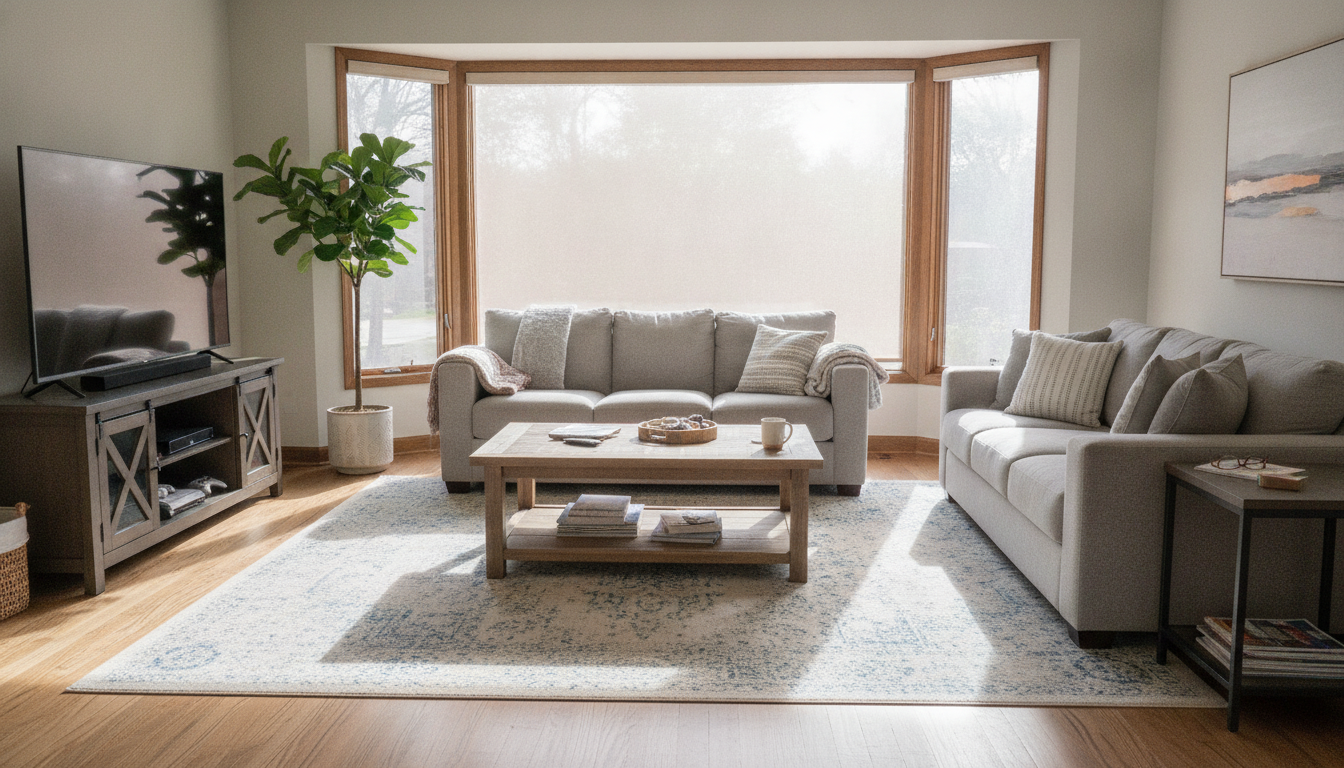
If glare is the primary issue — screens you can't see, headaches from afternoon sun in a home office, difficulty watching television — the relevant metric is visible light transmittance (VLT) and glare reduction percentage. Some homeowners reach for the darkest film available when glare is the problem, and that can work, but it often over-corrects — trading a bright, uncomfortable room for a dark, closed-off one. A ceramic film with moderate VLT, in the range of 40 to 50 percent light transmittance, can cut glare substantially while keeping rooms feeling open and naturally lit. That's a livable result rather than a tradeoff.
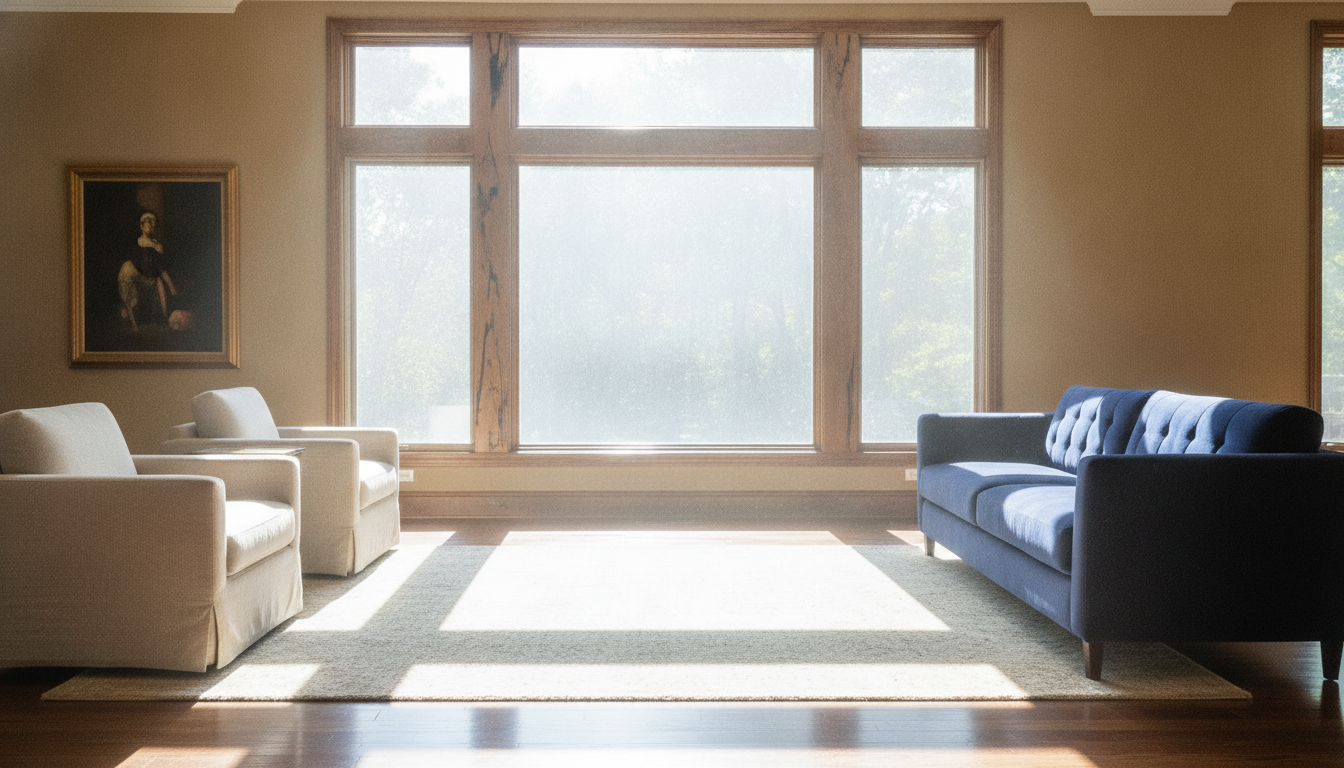
If UV protection is the primary concern — fading on hardwood floors, artwork, upholstered furniture, or carpet — virtually all quality window films perform well here. The majority of reputable film products block more than 99 percent of UV-A and UV-B radiation. UV protection alone is generally not a reason to choose a more expensive film, though UV rejection does come as a standard feature of the better performing ceramic products. Where the difference shows up is in whether the film also addresses heat and visible light, which contribute to fading alongside UV, making a comprehensive ceramic film the most complete solution for preservation-focused applications.
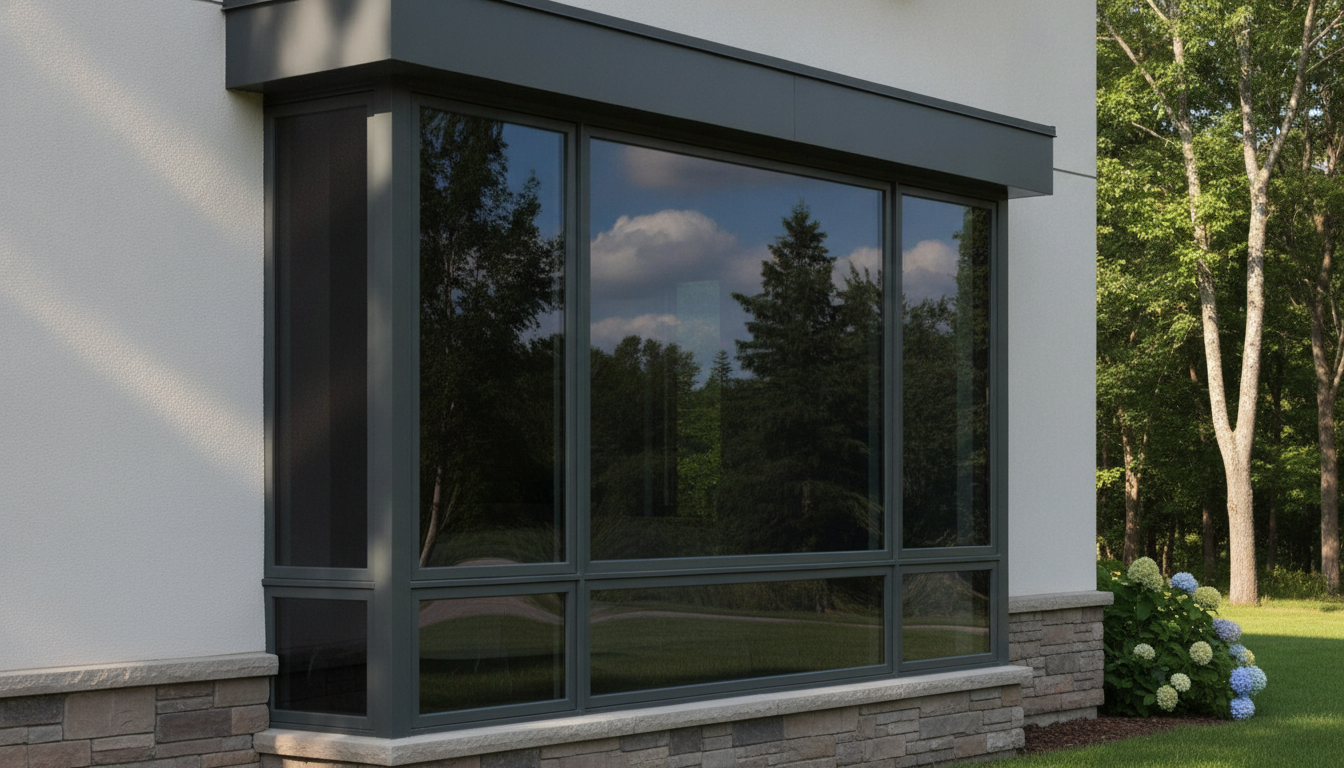
If privacy is the driving concern, the film selection logic shifts again. Reflective films create strong one-way privacy during daylight hours when the interior is darker than the exterior, but that effect reverses at night when interior lighting makes you more visible from outside than without any film at all. Frosted or decorative films offer consistent privacy in both directions regardless of lighting conditions but sacrifice natural views. Understanding this distinction before selecting a privacy film prevents the frustration of realizing the film doesn't perform the way you expected after installation is complete.
How Tennessee's Climate Shapes the Right Film Choice for Brentwood and Franklin Homes
The specific climate conditions across the Brentwood, Franklin, Nashville, and College Grove area make certain film choices more consequential here than they would be in a milder region. Tennessee's summers bring sustained periods of high solar intensity, high humidity, and temperatures that regularly push well past 90 degrees. The combination creates a heat load on residential windows that is substantially more demanding than what homeowners in northern states deal with. A film that performs adequately in a Chicago summer may be genuinely undersized for what a south- or west-facing window in Brentwood experiences from June through September.
Corsair Pro LLC's residential window tinting work is built around film technology specifically designed for these conditions — not general-purpose commercial film adapted for home use, but products engineered for the heat and UV demands of climates like Tennessee's. That specificity matters because film designed for moderate climates will reach its performance limits sooner, may show premature bubbling or discoloration from the expansion and contraction cycles driven by temperature swings, and will deliver less consistent results over the life of the product. You can learn more about the approach Corsair Pro LLC takes to residential film selection at corsairtint.com.
The service area geography also matters in practical terms. A home in College Grove with an open southern exposure sits in a different heat environment than a home in a more heavily shaded neighborhood closer to the tree cover in older parts of Brentwood or Franklin. Homes near the flat, open corridors of Thompson Station often deal with less natural shading from mature landscaping, which means solar gain from windows is unfiltered for more of the day. These site-specific factors should inform film selection — a consultation that accounts for your home's orientation, surrounding shade, and existing glass type will produce a more accurate recommendation than one based solely on what film is most commonly installed.
What the Installation Process Determines That the Film Itself Cannot
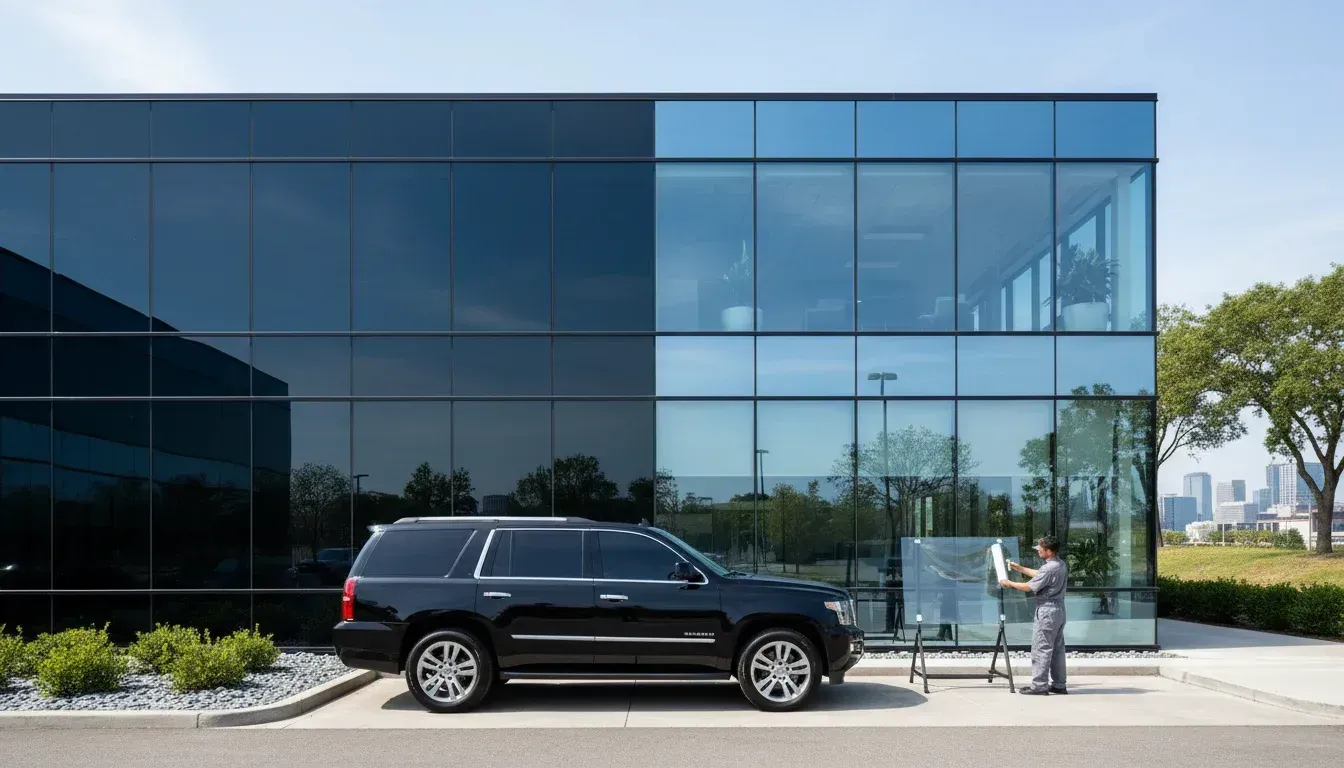
The best film available will underperform a lesser product installed correctly, if the installation itself is done poorly. This is the part of the residential window tinting conversation that rarely gets the attention it deserves. Film that isn't cut cleanly to the glass edge will lift at the corners over time. Film that isn't bonded fully during installation will develop bubbles that can't be reversed. Film applied to glass that wasn't properly cleaned will trap debris that creates visual distortion you'll see every time light comes through at an angle.
These aren't rare installation failures — they're the predictable result of prioritizing speed or low cost over process discipline. The film installation market, like most home improvement categories, includes operators who cut corners on the steps that are invisible at the moment of installation but visible within a season or two. Surface preparation time, edge trimming precision, and cure time management are where the difference between a professional installation and a disappointing one actually lives.
Quality ceramic films also require proper handling during installation. They're more sensitive to contamination and require a clean, controlled environment to bond correctly. An installer who shortcuts the preparation process with a lower-grade film can sometimes get away with it. That same shortcut with a premium ceramic product produces visible results — hazing, adhesion failures, or color inconsistency — that defeat the purpose of choosing a quality film in the first place.
Why the Right Conversation Before Installation Matters as Much as the Film
Every home presents a different combination of window type, orientation, existing glass, and homeowner goals. Single-pane glass, double-pane glass, and low-E coated glass all behave differently with window film applied, and some film types are not recommended for certain glass configurations because of the heat stress they can create. A film that works perfectly on clear single-pane glass may cause thermal stress cracking on certain types of sealed double-pane units if its absorption characteristics aren't matched carefully to the glass specification.
This is why the pre-installation conversation is not a formality — it's where the actual technical work of the project happens. Understanding what glass you have, what your specific comfort or protection goals are, what your home's orientation and sun exposure look like across seasons, and what your expectations are for appearance and privacy all feed into a film recommendation that will perform the way you expect it to. A process that skips this conversation and goes straight to film and price is selling a product, not solving a problem.
For homes across Brentwood, Franklin, Nashville, Thompson Station, and College Grove, the combination of climate intensity and wide variation in home age, construction, and window type makes that pre-installation assessment particularly important. Older homes with original single-pane windows and newer construction with thermally efficient double-pane glass require different film selection logic, and a recommendation built without knowing which you have is a recommendation built without enough information.
Getting the Right Film Starts With Getting the Right Assessment
Corsair Pro LLC approaches residential window tinting as a problem-solving conversation before it becomes an installation appointment. The film technology used is specifically designed for the heat and UV demands that Tennessee's climate places on homes across the area — and the selection process starts with understanding your home's actual exposure, your glass type, and what you're trying to accomplish, not with defaulting to the product that's simplest to install.
If you're dealing with afternoon heat that your HVAC can't overcome, furniture and flooring that's showing UV damage, glare that makes parts of your home uncomfortable to use, or privacy concerns that standard glass doesn't address, the right film exists for your situation. The path to it runs through an honest assessment of the problem first. Reach out to Corsair Pro LLC to start that conversation — the outcome of your installation will be determined more by the quality of that assessment than by anything else.