
Window Insulation Film Guide: Save Money on Heating and Cooling
Window insulation film is one of the most practical upgrades available to Tennessee homeowners — and in a climate as demanding as Brentwood's, the difference between adequate window treatment and a purpose-built solution is measurable in both comfort and utility costs. Corsair Pro LLC's residential window tinting service uses cutting-edge film technology specifically engineered to address Tennessee's intense summer heat and variable climate conditions, not just the generic demands of a temperate zone. If you've been watching your cooling bill climb each summer while your rooms stay stuffy near the glass, this guide explains why window insulation film works, what separates quality installations from shortcuts, and what Brentwood homeowners specifically need to consider before making a decision. Every section below covers a real aspect of how film performs — so you can evaluate your options with accurate expectations rather than sales language.
Glass is an almost perfectly transparent conductor of radiant heat. During a Tennessee summer, south- and west-facing windows can transmit solar energy into a room at a rate that forces your HVAC system to work continuously just to offset what the sun is pushing through. Window insulation film interrupts that process at the glass surface itself, and it does so through two distinct mechanisms that are worth understanding before you evaluate any product.
The first mechanism is solar heat rejection. High-performance window films contain metallic or ceramic particle layers that reflect a significant portion of the solar energy spectrum — particularly the infrared wavelengths responsible for the heat you feel near a sun-drenched window. The second mechanism is low-emissivity coating behavior, where certain film constructions reduce the amount of radiant heat that the glass itself re-emits into the room after absorbing solar energy. Together, these two effects mean that qualified window film doesn't just reduce what enters — it also changes how your windows behave as radiators after the sun has already warmed the glass.
This matters in Brentwood specifically because Tennessee summers are not simply hot — they combine high temperatures with high humidity and long solar exposure windows. A home that faces southwest will see direct sun for six or more hours during peak summer days, and standard single-pane or older double-pane glass provides minimal resistance to that sustained load. Homes built before the mid-2000s are particularly exposed because glass technology from that era was not designed with energy efficiency as a primary specification.
The challenge with this category is that not all films claiming insulating properties perform equally. Cheap film products applied incorrectly — especially films with air pockets, misaligned seams, or inadequate edge sealing — fail within a few seasons and provide inconsistent performance even while functioning. The problem the industry has is that a film installation looks complete the moment it goes on the glass. The quality difference only becomes apparent over time, which means shortcuts taken during installation are often invisible to the homeowner until the film is already failing.
One of the most reliable ways to evaluate a window film provider's depth of product knowledge is to ask about window film decorative options. This category — which includes frosted, etched, patterned, and gradient films applied for privacy or aesthetic purposes — uses the same base film construction as solar control and insulating products. A provider who understands how decorative film adheres, ages, and performs under UV exposure almost certainly understands the same variables for their thermal products.
Decorative film installations also reveal how a provider handles detail work: cutting film to precise tolerances around divided light windows, managing complex glass shapes, and achieving clean sight lines at edges and corners. These are the same skills that determine whether a solar or insulating film installation performs at spec or develops failure points within a few years. If a provider's decorative work is precise and clean, their insulating film installations are likely held to the same standard.
For Brentwood homeowners considering both privacy and thermal performance, some decorative films can serve dual purposes — a frosted or lightly tinted decorative film on a west-facing bathroom or bedroom window provides both visual privacy and a modest reduction in direct solar gain. This is not a substitute for a dedicated high-performance insulating film on primary living areas, but it demonstrates that a thoughtful film selection process considers every window's function, not just its orientation.
You can review the full range of residential film options available through Corsair Pro LLC's tinting services to understand which film specifications are appropriate for different window exposures and use cases in your home. A provider worth working with will ask about your home's orientation, your primary comfort complaints, and the construction date of your windows before recommending a product — not after.
Brentwood sits in a climate zone where summer cooling loads and winter heating losses both contribute meaningfully to annual energy costs. This is different from markets in the deep South, where cooling dominates so completely that heat retention in winter is barely a consideration. Tennessee homeowners deal with genuine temperature swings — summer highs above 90 degrees Fahrenheit and winter overnight lows that regularly fall below freezing — which means the ideal window film specification for this market has to address both ends of the seasonal range.
Films optimized purely for heat rejection can, in some configurations, reduce passive solar gain during winter months when that warmth would actually be welcome. This is a genuine tradeoff that matters in a four-season climate like Middle Tennessee's, and it is one reason why the film technology Corsair Pro LLC selects for residential installations is chosen specifically for Tennessee's conditions rather than applied generically across all markets. The cutting-edge film technology referenced in their residential service specification reflects the reality that a film suited for a Florida coastal home is not automatically the right choice for a Brentwood house that faces cold January mornings as often as it faces July afternoons.
Low-emissivity film constructions are particularly relevant in this context because they reduce heat loss through glass in winter by the same mechanism they reduce solar heat gain in summer — the coatings limit radiant energy transfer in both directions. This makes them well-suited for climates where seasonal demands shift significantly, which describes the Nashville metro area accurately.
The installation process for this type of film also requires controlled conditions. Films with low-emissivity coatings are more sensitive to temperature and humidity during application, which affects cure time and adhesion quality. An installer who applies film during inappropriate ambient conditions — too cold, too humid, or in direct sunlight — will see adhesion failures and optical distortions that a more careful application timeline would have prevented. This is not a minor consideration in a Tennessee spring or fall, when temperatures can vary by more than 30 degrees Fahrenheit within a single week.
The film specification sheet for any product you're considering should list at minimum its visible light transmittance, solar heat gain coefficient, and UV rejection rate. These three numbers tell you what the film actually does in measurable terms rather than marketing language. A high solar heat gain coefficient — above 0.5 — means the film is not providing meaningful thermal resistance. A UV rejection rate below 99% means the film is not protecting your furnishings and flooring from the accelerated fading that Tennessee's sun exposure causes over time.
For Brentwood homes with significant wood flooring, upholstered furniture, or artwork near windows, UV protection is not a secondary consideration. Tennessee receives meaningful UV exposure across all four seasons, not just summer, and the cumulative fading damage to interior finishes occurs year-round even when the temperatures outside are cold. A film that rejects 99.9% of UV radiation provides substantially better protection than one rated at 98%, because UV damage compounds over years rather than appearing suddenly.
Ask any provider you're evaluating for the specific product data sheets — not just a description of performance attributes — before agreeing to an installation. A qualified installer will provide this without hesitation because they have already selected products they trust and can explain in technical terms. A provider who can only describe their films as "high performance" or "professional grade" without referencing specific specifications is not giving you the information you need to make a considered decision.
The window count and orientation of your home also affect the total scope of a film installation significantly. A home with primarily north-facing windows has different thermal priorities than one with a large western exposure receiving late afternoon sun. A proper site assessment before installation should account for these differences rather than applying a single film product across your entire home regardless of how each window performs during the day.
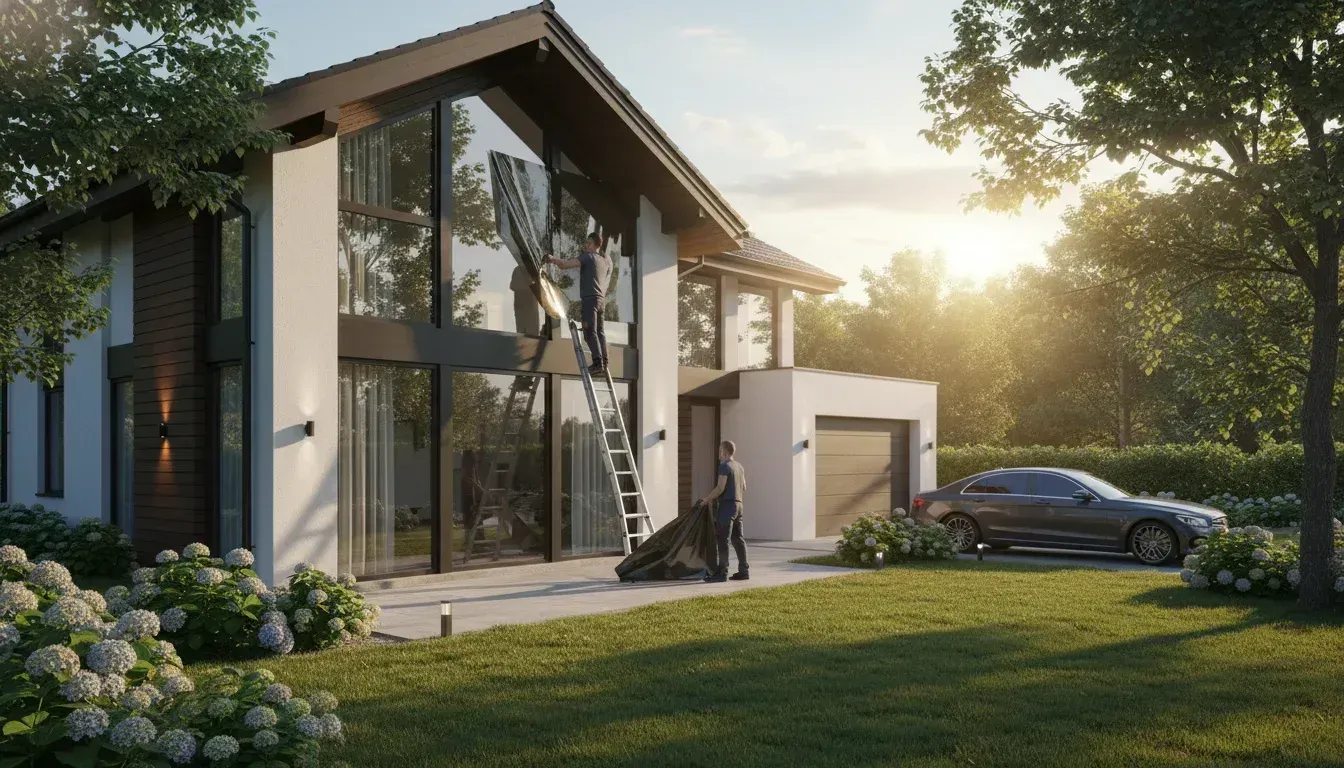
Even the highest-performing film product will underperform its rated specifications if the installation is executed poorly. Adhesion failures at edges allow moisture infiltration that causes film to bubble and delaminate. Improperly sized cuts leave gaps that reduce both thermal performance and aesthetics. Films installed without proper surface preparation — particularly on windows that have mineral deposits or adhesive residue from previous treatments — adhere inconsistently and create optical distortions that degrade over time rather than stabilizing.
The warranty conditions attached to most professional-grade window films require that installation be performed by a qualified installer using the manufacturer's specified tools and processes. An installation that doesn't meet those conditions may void the product warranty entirely, leaving you without recourse if the film fails prematurely. This is a detail that homeowners comparing quotes should ask about directly: whether the installer is authorized to warranty the film product they're using, and what the warranty covers in terms of adhesion failure, color shift, and delamination.
Corsair Pro LLC's residential window tinting work in the Brentwood area is grounded in the principle that film technology engineered for Tennessee's climate demands should be installed with the same level of care that went into developing it. A precise, clean installation on the right film product for your home's specific conditions is the combination that delivers long-term performance — not either element alone.
A consultation worth your time begins with questions about your home, not a product pitch. The installer should want to know where your comfort problems are most pronounced, which rooms face afternoon sun, whether you have existing window treatments competing with or compensating for inadequate glass performance, and whether your primary goal is cooling cost reduction, UV protection, privacy, or some combination of the three.
After gathering that information, a qualified provider should walk through your home and assess each window's orientation, condition, and existing glass specification before recommending any film product. The assessment should produce a clear recommendation that explains why a particular film was selected for each application area — not a single product applied to every window by default.
For homeowners in Brentwood and the surrounding Middle Tennessee area, the conversation should also address how Tennessee's transitional seasons affect installation timing. Spring and fall installations allow film to cure under moderate temperature and humidity conditions, which produces more consistent adhesion than installations performed during peak summer heat or winter cold. If you're planning a whole-home film installation, scheduling it during a suitable seasonal window is part of executing the project correctly.
Corsair Pro LLC serves Brentwood and surrounding communities with the specific understanding that Tennessee's climate creates demands that generic film solutions don't fully address. Reaching out to discuss your home's specific window exposure and thermal comfort challenges is the most direct way to understand what film specification and installation scope makes sense for your situation. The right film, installed correctly for your home's actual conditions, is an investment that pays back in reduced utility costs and improved comfort across every season Tennessee delivers.